Welcome to Void Respawn — And Why Burnout Paradise Still Matters
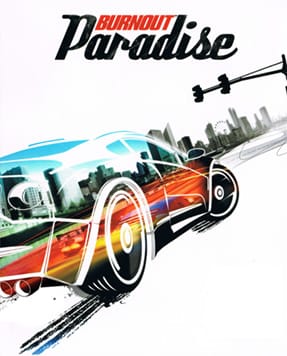
Welcome to Void Respawn This is the first post on Void Respawn No fluff. No corporate mission statement. No list of values. Just this: we’re here to write seriously about games — the ones that defined us, the ones that disappoint us, and the ones the industry quietly forgot. To kick things off, let’s talk about a game that somehow belongs in all three. — Paradise City, 2008 When Burnout Paradise launched in January 2008, it did something almost no racing game had attempted at that scale — it removed the race menu entirely. No lobby. No track select. No loading screen between you and the action. You turned the key, pulled out onto the streets of Paradise City, and the game simply began. It sounds obvious now. It wasn’t then. Criterion built an open world that wasn’t just set dressing — it was the system itself. You learned the city the way you learn a real place: through repetition, through missed turns, through accidentally discovering a rooftop shortcut at 200mph. Every intersection held an event. Every alley had a purpose. The map wasn’t something you checked — it was something you knew. The crash system was still there, still spectacular, still borderline sadistic in slow motion. But Paradise added something the earlier games didn’t quite have: consequence. The city remembered. You had to as well. — What Gaming Lost When This Era Ended Here’s the part that doesn’t get said enough: Burnout Paradise represents a design philosophy that has almost completely disappeared. The game launched complete — and then gave players more. For free. Over the following year, it received major updates: - Motorcycles - New multiplayer modes - A full day/night cycle - Eventually, an entire new island Paid DLC existed, but it was optional. Cosmetic. The core experience kept improving because the developers actually believed in what they had built. Now compare that to the current landscape. Live service games that launch incomplete by design. Battle passes that punish you for not logging in daily. Open worlds filled with icons that mean nothing. Somewhere along the way, the industry learned the wrong lessons from what came next — and quietly forgot what came before. — It Wasn’t Perfect — That’s Not the Point Burnout Paradise had flaws. Real ones. - No proper race restart (maddening) - A GPS system that fell apart at speed - Multiplayer that required everyone to physically drive to the same location That last one sounds charming until you’re fifteen minutes in, waiting. But here’s the difference: The game was complete. It had a clear vision. It committed to it. And it delivered it without trying to sell you the rest later. — The Remaster Problem In 2018, Burnout Paradise Remastered released. On paper, it was exactly what you’d expect: - Updated visuals - 4K support - All DLC included But it also came with a $50 price tag. For a ten-year-old game. With no new content. Critics were mostly positive — because the game is still good. That never changed. But player reaction told a different story. People weren’t rejecting Burnout Paradise. They were reacting to what had been done to it. A game that once stood for generosity had been repackaged as a premium product. And that contrast didn’t go unnoticed. — Why We’re Starting Here Void Respawn exists because games deserve to be taken seriously. Not filtered through hype cycles. Not reduced to review scores tied to ad spend. Not covered in a way that confuses noise for importance. Burnout Paradise is the right place to start because it raises a question the industry still hasn’t answered: Why did we stop making games like this? Not the mechanics. Not the crashes. The attitude. The idea that a game was something you built, gave to people, and kept improving — not because you had to, but because you respected the people playing it. — What Comes Next We’ll be exploring questions like this regularly. - Looking at older games through a modern lens - Breaking down new releases with actual context - Talking about the industry with as much honesty as possible No noise. No filler. Just games — and the ideas behind them. — Welcome to Void Respawn Strap in.